




It represents the difference between total assets and total liabilities. Total equity shows the portion of the company’s assets that are owned outright by shareholders, which is crucial for evaluating ownership claims and control. It helps Record Keeping for Small Business in determining the book value of a company, aiding in mergers, acquisitions, or sale negotiations.
How to Calculate Total Capital?
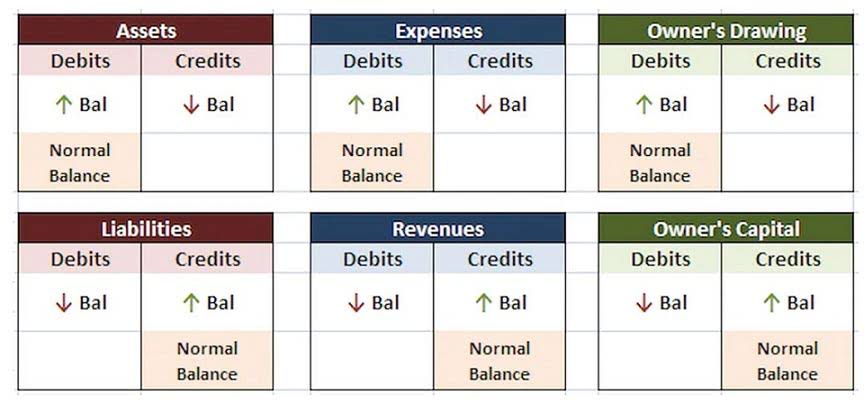
In the initial phases of a start-up business, equity is typically low or even negative. This is because start-up businesses often require significant investments and may incur losses before becoming profitable. Equity for a start-up business is often derived from founders’ investments or external funding sources, such as venture capital or angel investors. Total Equity reveals the net worth of a company from a shareholder perspective. Increasing equity indicates value creation and financial health, while declining equity could suggest losses or high leverage.
Can You Use the Same Formula for Calculating Equity on a Balance Sheet to Calculate Earnings Per Share?
- Based on the information, calculate the Shareholder’s equity of the company.
- It’s a tool that fuels informed decisions, whether you’re evaluating business health, preparing reports, or shaping financial strategy.
- However, companies in capital-intensive industries may use more debt financing, leading to lower equity levels relative to their assets.
- Total Equity is the interest left in a business’ assets after liabilities are removed.
Conceptually, stockholders’ equity is useful as a means of judging the amount of money that a business has retained. Let’s illustrate the total equity formula concept of total equity with a hypothetical example. Total Equity metrics are less relevant for early-stage companies or those operating in industries where high levels of debt are the norm, such as financial institutions. In these cases, other financial metrics like cash flow or profitability might provide more useful insights. Clearly outline any significant influence you have over an investee to provide investor insights into potential impacts on financial performance. If you own shares in a company, you own a piece of its equity value.
Understanding Different Types of Liabilities
Since these shares are no longer outstanding in the hands of the public, they do not represent an ownership claim against the company. The concept of residual interest is central to understanding equity’s role. If a company were to liquidate all its assets and pay off every outstanding liability, the remaining cash value would belong to the owners.

It’s calculated at least annually for financial reporting but can also be tracked quarterly or monthly for internal analysis. Investors should analyze this metric in the context of the company’s overall financial strategy and industry benchmarks. Here, we’ll assume $25,000 in new equity was raised from issuing 1,000 shares at $25.00 per share, but at a par value of $1.00. In recent years, more companies have been increasingly inclined to participate in share buyback programs, rather than issuing dividends. The excess value paid by the purchaser of the shares above the par value can be found in the “Additional Paid-In Capital (APIC)” line item. Here comes a handy formula that might seem intimidating at first, but it’s actually quite straightforward.
How to Calculate Equity?
It represents ownership value, not theoretical but real, documented, and actionable. Total Equity is a vital component of a company’s balance sheet, sitting alongside total liabilities and total assets. It helps investors understand the company’s financial health and is a primary factor in various financial ratios, including Return on Equity (ROE) and Debt to Equity Ratio (D/E). Total equity refers to the value that shareholders have in a company after deducting any liabilities.
Importance for Investors
- Anne, Alex, and Anne’s mom each own $10,000 in shares—a third of the company each.
- This value represents the ownership interest in the company and is calculated by subtracting total liabilities from total assets.
- As one of the three core financial statements, the balance sheet is used to assess a company’s financial strength, liquidity, and capital structure.
- There’s been an increased focus on sustainable investing, looking for companies that prioritize ESG factors.
- Based on this parameter, the firm’s fundamentals are judged and compared with other companies.
To calculate equity value starting from enterprise value, the process involves removing the value of non-equity claims on the company. The two metrics—equity value and enterprise value—are the two most common methods to measure the valuation of a company. Hence, the “Owner’s Equity” line item is recorded on the balance sheet of a company, akin to the “Shareholders’ Equity” line item.

Shareholder Equity (SE): What It Is and How It Is Calculated
For instance, if a company reports $50 million in total assets and $20 million in liabilities, the resulting Total Equity What is bookkeeping must be exactly $30 million. This mathematical requirement ensures the financial statement always remains in equilibrium. Master the fundamentals of financial accounting with our Accounting for Financial Analysts Course. This comprehensive program offers over 16 hours of expert-led video tutorials, guiding you through the preparation and analysis of income statements, balance sheets, and cash flow statements.
The distinction in the usage of the term pertains more to the corporate structure of the business (and the applicable taxation policies). LLCs and corporations seldom use the term “Owner’s Equity” in practice — albeit, the two terms are practically the same conceptually. In contrast, the standard term used for limited liability corporations (LLCs) and corporations is “Shareholders’ Equity” (or ”Stockholder’s Equity”). While a generalized sweeping statement, the owner and the business can be perceived as “one and the same” in a sole proprietorship. I understand that the data I am submitting will be used to provide me with the above-described products and/or services and communications in connection therewith. We serve on FDI advisory, cross-border accounting, International tax planning and Management consulting needs of our overseas clients all over the world.